




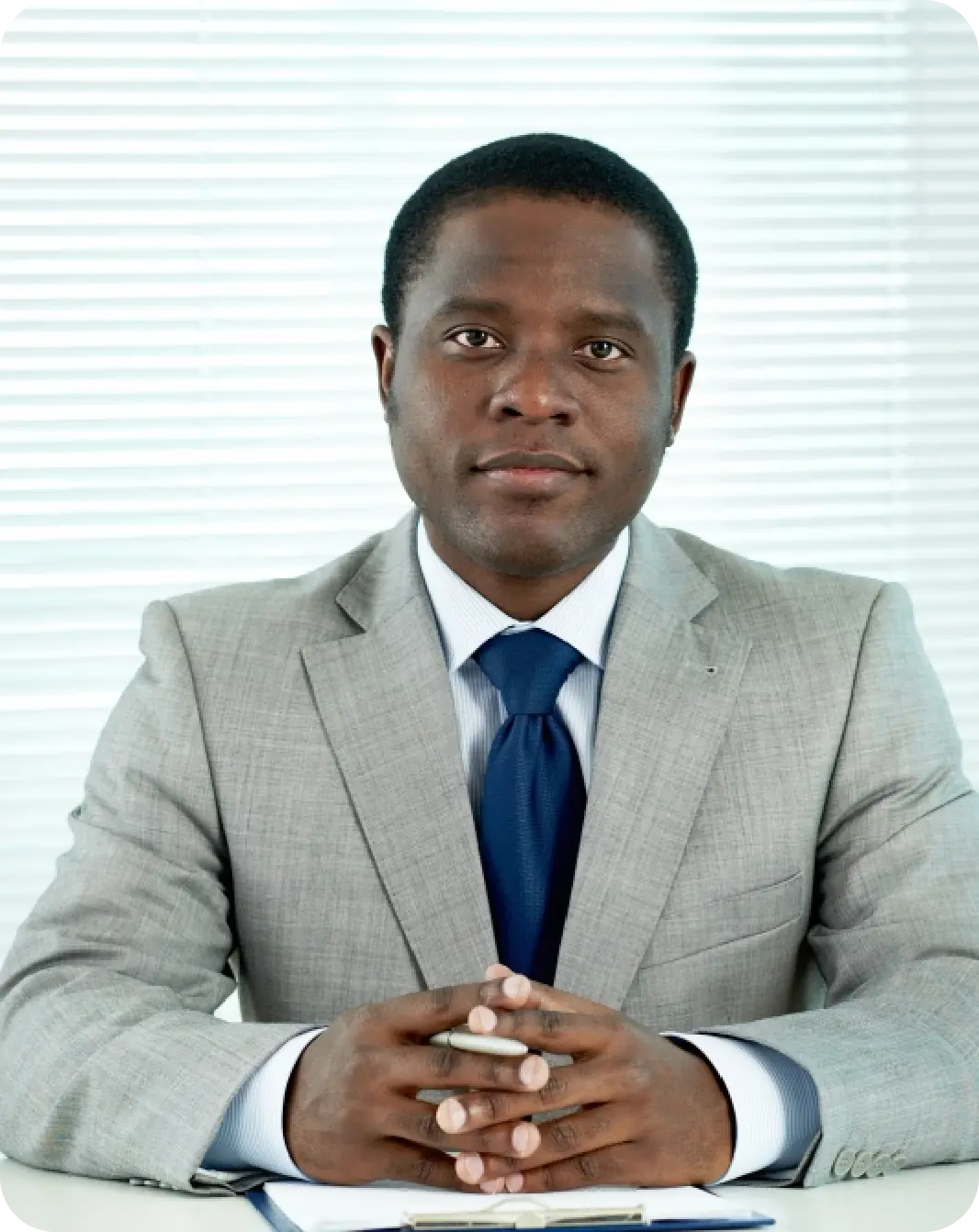
Holding a doctorate in private law and criminal sciences, Maître Gameli NOUWADE has seen his work recognized with an award for excellence. He also holds a Master’s degree (Master 2) in fundamental private law, demonstrating a profound mastery of legal mechanisms and the theoretical underpinnings of the law. Driven by an enduring passion for law, justice, education, and the art of oratory, he is a qualified lawyer, having obtained the Certificat d’aptitude à la profession d’avocat (CAPA).
His background combines rigorous academic training with solid practical experience gained at both Parisian and international law firms, where he developed comprehensive expertise in both litigation and advisory work. Maître NOUWADE possesses a deep understanding of the legal needs of businesses—honed, in part, through his time in a department specializing in the amicable resolution of disputes. Furthermore, having worked within the court system, he has a precise grasp of what the judiciary expects, providing him with a strategic perspective that proves highly effective in the handling of cases.
His academic involvement—spanning eight years of teaching at the undergraduate and master’s levels across several French universities—fosters a rigorous pedagogical approach and a rare ability to make the law clear and accessible for the firm’s clients.
Having authored a book on the art of the “hook” (opening sentence)—published by Enrick Éditions—he will soon see his thesis released by Éditions L’Harmattan, further establishing his commitment to legal research and the dissemination of knowledge.
Maître Gameli NOUWADE is also a member of several prominent professional organizations, including the French Association of Criminal Law, the Association of Corporate Counsel Lawyers (ACE), the Association of Criminal Defense Lawyers, and the Association of Doctors of Law. His involvement in these organizations reflects his commitment to legal excellence, continuous professional development, and the sharing of knowledge.
He regularly participates in symposia, conferences, and scientific events, where he presents his work and engages in discussions with academics, members of the judiciary, and legal practitioners. This active involvement in the scholarly and professional sphere enhances the quality of his expertise.